
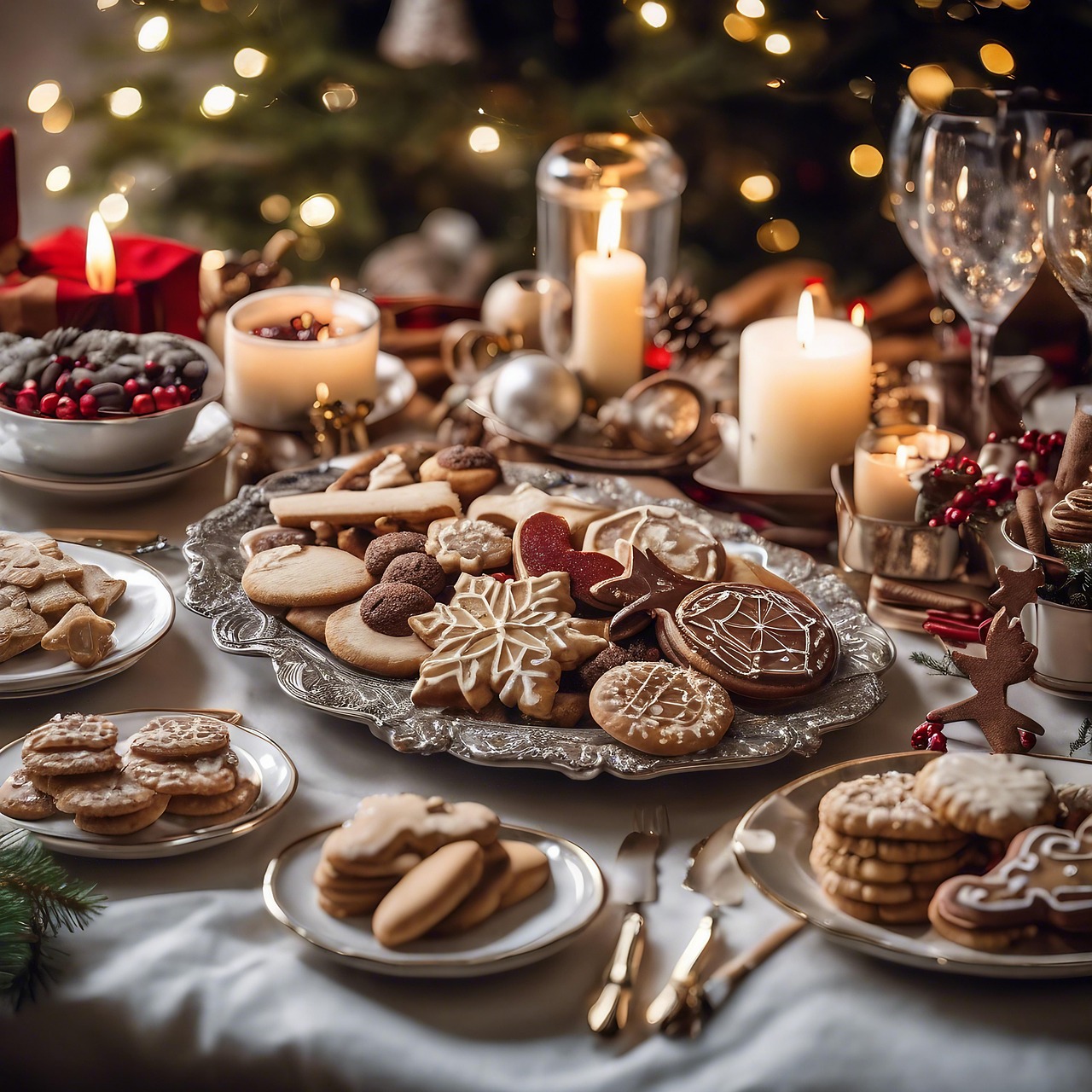
When ancient people gathered for the winter solstice, most likely food was part of the celebration. In medieval Europe, the feasting may have ended with something sweet—a dessert. During the Middle Ages, butter, sugar and lard were expensive items reserved for important holidays like Christmas. Cookies were created as a small treat to share with neighbors and friends. Since cookies are more portable than cakes and pies, they have crossed oceans and traveled over lands. What's your favorite cookie? Do you know its heritage?
To celebrate this holiday season, I'm sharing the origins of some of my favorite cookies.
- Chocolate chip cookies were invented by Ruth Graves Wakefield in 1938 at the Toll House Inn in Massachusetts where she was a chef. The fable is that the chips in the cookie dough mix were an accident. For the record, Ruth stated that she purposely put the chips in the dough as an experiment. And the rest is history.
- Shortbread cookies are associated with Scotland evolving from a medieval biscuit bread into a rich, buttery cookie. The classic 3:2:1; recipe is: three parts flour, two parts butter, and one part sugar.
- Lace cookies originated in Renaissance Italy in Florence and may be known as Florentines. My aunt Betty brought her homemade lace cookies to one of our holiday family gatherings and I have been a lover of these crispy, thin cookies ever since. I discovered them in the Whole Foods bakery department.
- Butter cookies, the ones in the Blue Tin can herald from Denmark. These are like shortbread cookies, but butter cookies are sweeter and include eggs in the dough.
- Rugelach – a traditional Jewish pastry from Poland. Another Whole Foods discovery, these cookies and the lace cookies are my #1 dessert pick especially the rugelachs filled with apricot or chocolate.
Discover your favorite cookie's history and share it with us. Do you have a treasured family cookie recipe? I’d love to hear about it and try something new.
Merry Christmas and Happy Holidays to all.





My favorite is Pizzelles. 🙂 Melis
Never had pizzelles! I’ll be on the lookout for those.